


Israel has clearly decided to retaliate against Iran for missile and drone attacks, Britain's foreign minister David Cameron said during a visit to Israel on Wednesday, the starkest warning yet of another volley coming in regional escalation, Reuters reports.
World powers are striving to prevent a wider outbreak of conflict in the Middle East after Iran's attacks on Saturday night, which involved hundreds of missiles and drones, the first time Iran has directly attacked Israel after decades of confrontation by proxies.
More than six months into a war between Israel and the Iran-backed Palestinian militant group Hamas that has seen flare-ups in violence across the Middle East, diplomats are searching for a way to avert direct battle between Israel and Iran.
"It's clear the Israelis are making a decision to act," Cameron told reporters early in his visit to Jerusalem. "We hope they do so in a way that does as little to escalate this as possible."
"They need to be given a clear unequivocal message by the G7," he said.
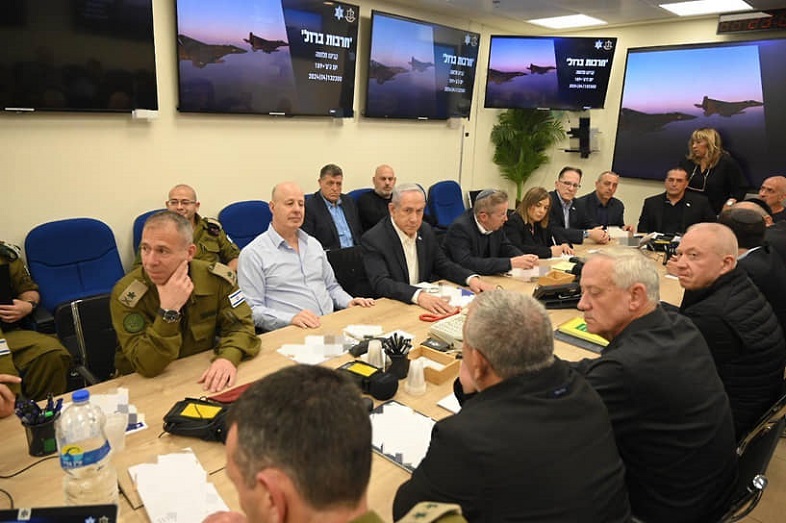
Israel is expected to discuss its response to Iran at a meeting of Prime Minister Benjamin Netanyahu's war cabinet, which also includes centrist rivals brought into the government as a unity gesture after Hamas attacked Israel on Oct. 7.
Earlier, Treasury Secretary Janet Yellen said the United States would use sanctions, and work with allies, to keep disrupting Iran's "malign and destabilising activity".
European Union foreign policy chief Josep Borrell, speaking in Brussels after an emergency video conference of EU foreign ministers, said some member states had asked for sanctions against Iran to be expanded.
Borrell said the proposal would expand a sanctions regime that seeks to curb the supply of Iranian drones to Russia so that it would also include the provision of missiles and could also cover deliveries to Iranian proxies in the Middle East.