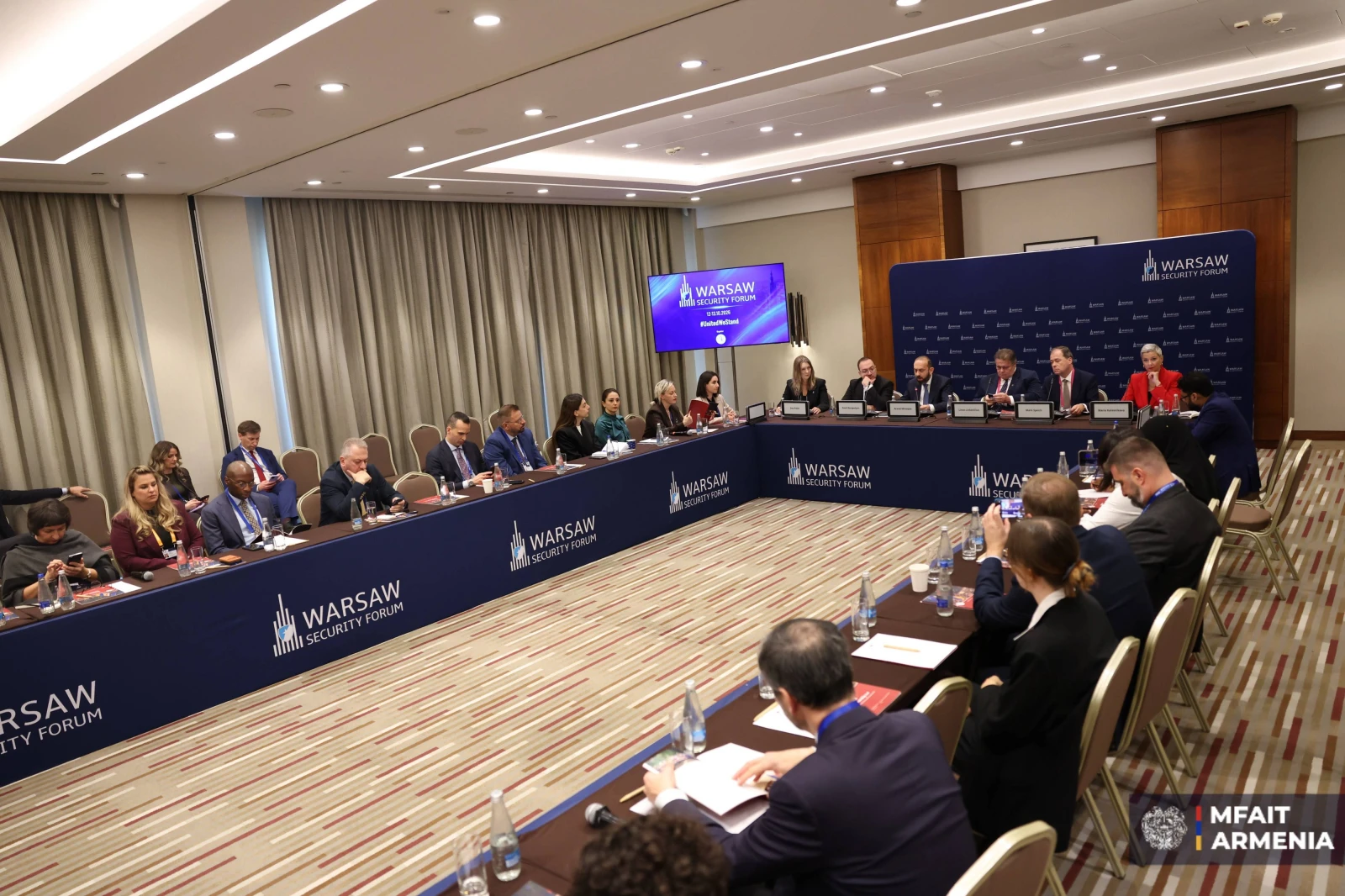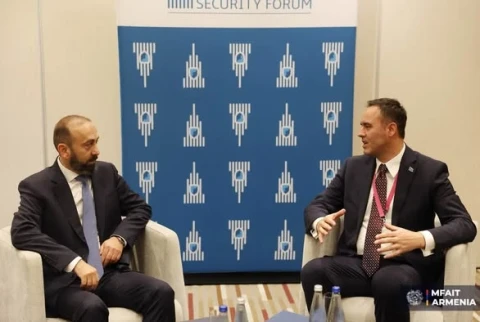

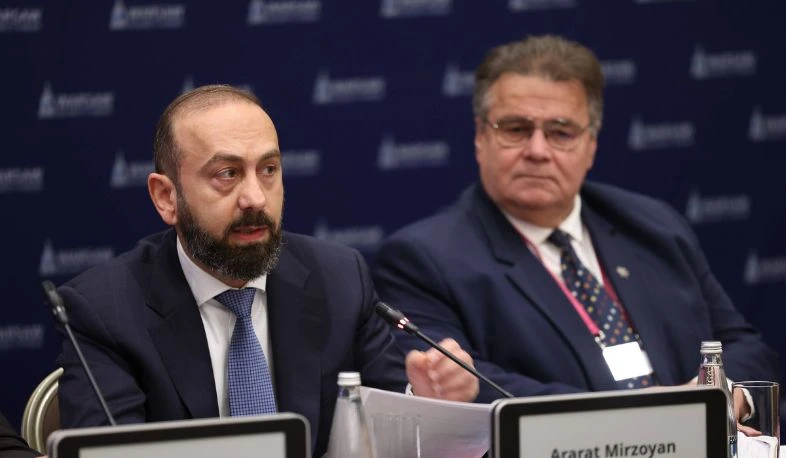
On October 13, Minister of Foreign Affairs and International Trade of Armenia Ararat Mirzoyan delivered opening remarks at the roundtable discussion entitled “EU’s Eastern Partnership Reimagined”, held within the framework of the Warsaw Security Forum.
Below is the transcript of the FM's speech published by the ministry:
“Excellencies,
"Distinguished Colleagues,
"Ladies and Gentlemen,
"It is a privilege to address this esteemed audience today.
"We meet at a juncture when one of the European Union’s most successful political initiatives-the Eastern Partnership-is being tested by the new realities of an increasingly fragmented world.
"Since its establishment in 2009, while acknowledging that the six Eastern partner countries do not necessarily share identical aspirations or priorities, the underlying premise of Partnership has been that closer engagement with the European Union could contribute to democracy and institutional reforms across the EU’s eastern neighbourhood.
"Over nearly two decades, however, profound geopolitical, security and societal transformations have fundamentally altered the environment in which the Partnership operates, and the six Eastern partner countries have chosen different political and European trajectories. This has inevitably challenged the original concept of a broadly common model of partnership.
"The fundamental question is how it can remain relevant, effective and ambitious in a fundamentally changed political environment.
"Here, I want to share Armenia’s distinctive perspective in three points.
"First, the Eastern Partnership should retain its strong emphasis on democracy, the rule of law and institutional resilience.
"From Armenia’s perspective, one of the most significant achievements of the Eastern Partnership has been its contribution to democratic governance and institutional reform. These reforms matter not only because they bring Armenia closer to European standards, but also because they directly strengthen the resilience, effectiveness and legitimacy of our state institutions. In an era of hybrid threats and disinformation, strong, accountable institutions are themselves a strategic asset.
"Second, Armenia’s experience demonstrates the importance of envisioning the bilateral relations with the European Union in line with each partner’s aspirations and level of ambition.
"Armenia-EU relations have developed substantially since the launch of the Eastern Partnership, including through the consistent implementation of the Comprehensive and Enhanced Partnership Agreement. Our partnership has evolved into a more ambitious character as in December 2025 we adopted a new Strategic Agenda for the Armenia-EU partnership, expanding into areas including security and resilience, connectivity, energy, mobility and sectoral integration.
"Our European aspirations have also taken legal and political form. In March 2025, Armenia also adopted the law on launching the process of joining the European Union, while the first-ever Armenia-EU Summit took place in May 2026, further underscoring the growing strategic dimension of the relationship. On the ground, the EU Mission in Armenia has contributed to stability along our border with Azerbaijan since 2023, while the new EU Partnership Mission helps strengthen our resilience to disinformation, hybrid threats and cyber risks.
"Responding to our ambitions, the European Union has been developing an increasingly tailored bilateral relationship. Armenia, not being a candidate country, has received the Resilience and growth plan, we are progressing on the Visa liberalization dialogue and most recently EU Autonomous Trade Measures came to support the diversification of our trade.
"Third, the future of the Eastern Partnership must take account of the changing geopolitical and connectivity landscape of the South Caucasus.
"The region of today is not the region that existed when the Eastern Partnership was launched. The Washington Peace Summit of August 2025 unveiled a new reality for the South Caucasus-one that creates opportunities for a more peaceful, interconnected and interdependent region.
"The Washington Declaration also inaugurated the TRIPP initiative, which, by unlocking the region’s economic, transit and energy potential and establishing reliable connectivity between Europe and Asia, can also contribute to the peace and prosperity in the region.
"The unlocking of the region’s potential, in line with Armenia’s Crossroads of Peace vision, and the Armenia-EU Connectivity Partnership can bring Europe and its eastern neighbours closer together, while also helping the European neighbourhood adapt to the realities of a profoundly transformed geopolitical environment.
"Given all these factors and transformations, Armenia’s experience demonstrates that the future of the Eastern Partnership may lie precisely in its capacity to evolve: from a common neighbourhood framework into a flexible platform capable of linking different European pathways and accommodating different aspirations and forms of European integration, while keeping democratic principles, cooperation, connectivity and resilience at its core.
"Ultimately, a reimagined Eastern Partnership should aim not to preserve a model created for yesterday’s realities, but to create a framework capable of seizing today’s opportunities -flexible enough to accommodate different paths, yet ambitious enough to keep our regions connected.
Thank you”.