

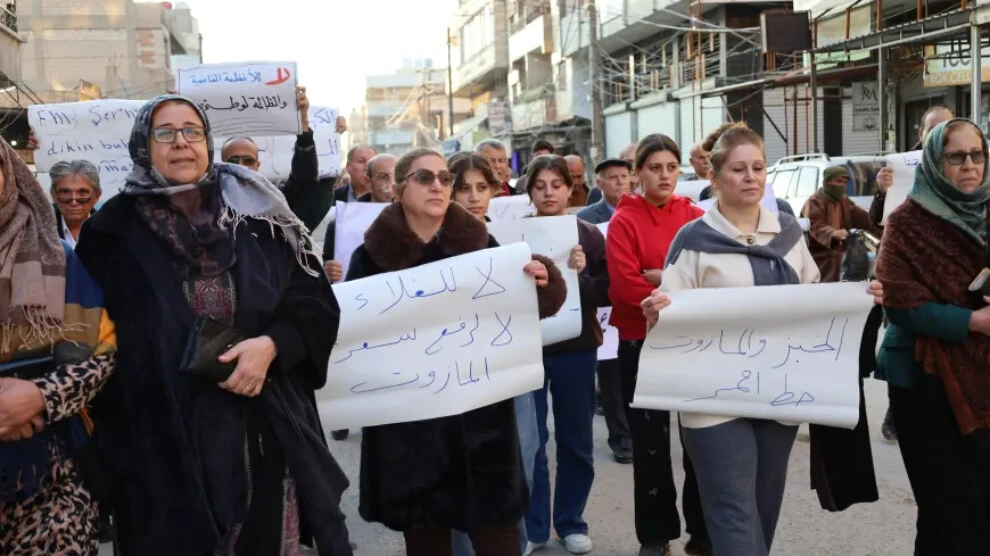
Reuters. Protesters waved Kurdish flags in Erbil on Thursday (November 26) as they rallied against Iraqi Prime Minister Ali al-Zaidi’s decision to deploy federal troops to secure Iraq’s international borders in the Kurdistan region.
Iraq's highest court ruled on Wednesday (November 25) that Baghdad can deploy federal forces along all international borders including in the semi-autonomous Kurdistan region, backing a push by Prime Minister Ali al-Zaidi to assert more central control.
Zaidi ordered federal authorities on Tuesday (November 24) to take over border crossings run by the Kurdistan Regional Government, and has also demanded authority over oil fields controlled by Kurdish security forces.
The moves against the Kurds, just a week after Zaidi ordered a showdown against Kataib Hezbollah, a Shi'ite militia aligned with Iran, put Zaidi in confrontation with a second major faction in a country where armed groups have amassed power over decades of ethno-sectarian civil war.
Relations between Baghdad and the Kurds, who mainly govern themselves while receiving a share of oil revenue from Baghdad, have often been troubled by disagreements and mistrust over control of oil, money, territory and trade.
The Kurdistan Regional Government on Wednesday rejected what it called "military language and threats" in a statement from the spokesman for the Iraqi military announcing the new measures. It said it was working with federal authorities to combat corruption and called for an end to oil smuggling across Iraq, one of the world's leading oil producers and a US ally.
Iraq's state news agency, citing what it said was an Iraqi government intelligence report, said oil belonging to the state-owned North Oil Company was being diverted and smuggled from Kirkuk, as well as from Sulaymaniyah inside Kurdistan, to Iran and onward to Afghanistan.