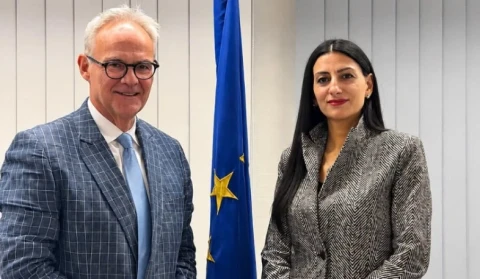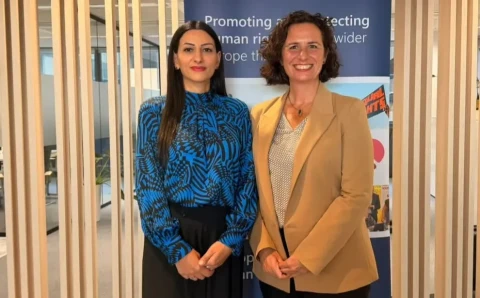


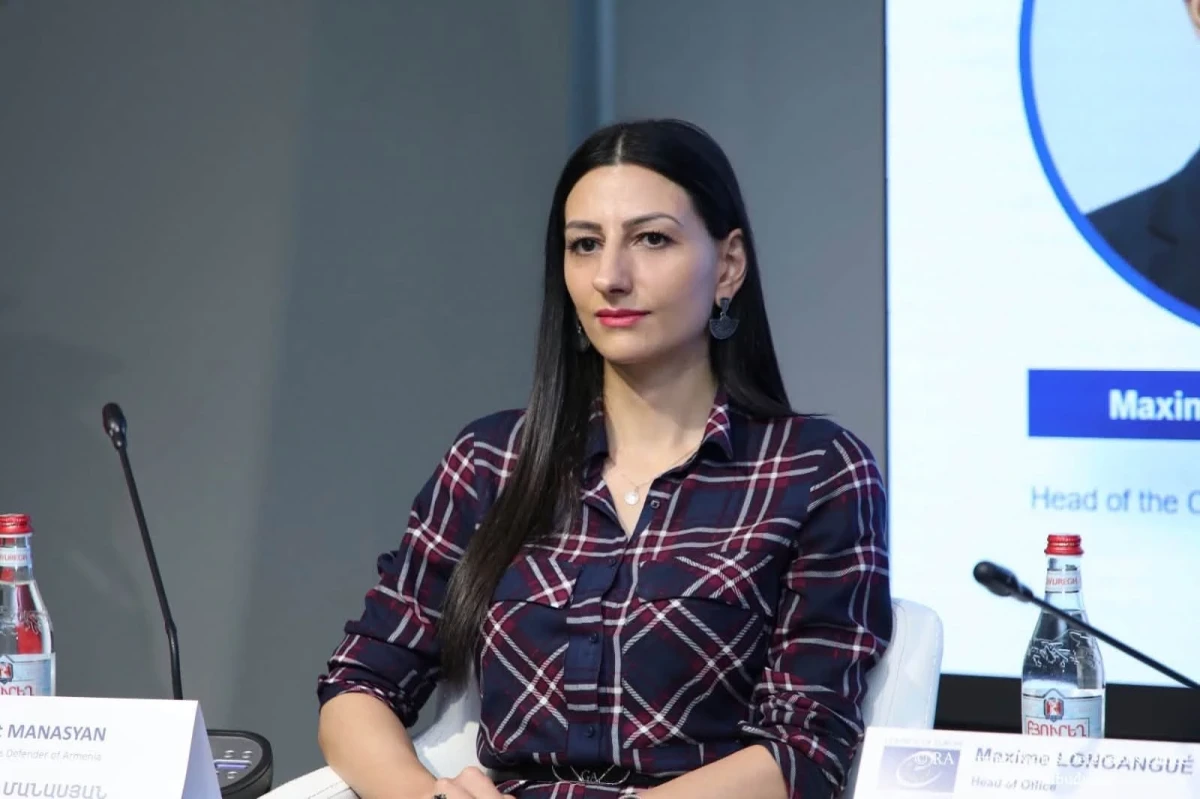
On 25 November, Human Rights Defender of the Republic of Armenia Anahit Manasyan delivered opening remarks at the closing event of the Council of Europe’s “Strengthening Social Rights in Armenia” project, Armenia’s Ombudsperson’s press office reported. The event was titled “Advancing Social Rights in Armenia through Partnership and Action.”
Opening remarks were also delivered by Maxime Longangué, Head of the Council of Europe Office in Yerevan, and Nazeli Baghdasaryan, Chair of the Standing Committee on Labour and Welfare of the National Assembly of Armenia. The event was moderated by Margarita Galstyan, Head of the Co-operation Unit of the Council of Europe’s Department of Social Rights.
The event reviewed the project’s results and the work undertaken to protect and promote social rights. Participants also discussed outstanding challenges and priorities for future cooperation.
In her opening remarks, Anahit Manasyan welcomed the partnership between the Human Rights Defender’s Office and the Council of Europe across several areas, including the strengthening of social rights. She stressed that the effective enjoyment of social rights is integral to human rights protection and essential to living in dignity, fostering social cohesion and ensuring the sustainable development of a democratic state.
“Protecting social rights requires going beyond enshrining legal safeguards. Everyone must be able to exercise these rights in practice and have access to the safeguards they need in social protection, employment, housing, education and other areas. It is particularly important that public policies and reforms be grounded in international human rights standards and take into account the needs of people in the most vulnerable situations,” Anahit Manasyan stressed.
Addressing the significance of the European Social Charter, the Defender highlighted the importance of applying its standards consistently, pursuing ratification of the relevant provisions, duly reflecting international obligations in domestic legislation and developing the institutional and practical mechanisms needed to implement them.
Anahit Manasyan highlighted housing, the protection of labour and trade union rights, occupational safety and health, and the prevention of violence and harassment in the workplace. She drew particular attention to accessible environments and access to vocational education, training and the labour market for persons with disabilities, as well as social safeguards for older persons. She also emphasised the need to remove barriers, ensure equal opportunities and enable everyone to participate fully in society.
The Defender stressed that sustained cooperation among public authorities, employers, workers’ organisations, civil society and international partners is essential to making progress across these areas.
“An effective human rights protection system requires the involvement of all stakeholders in developing and implementing decisions, especially the individuals and groups whose rights those decisions directly affect. Taking their needs, concerns and proposals into account is essential to finding targeted and effective solutions,” Anahit Manasyan said.
Tatiana Puiu, Vice-President of the European Committee of Social Rights, presented the role of the European Social Charter in strengthening democratic resilience. The event also featured a presentation of the project’s main results, including efforts to bring national legislation into line with the Charter and other European standards and to strengthen the institutional capacity of relevant public and non-state bodies.
Syuzanna Sargsyan, Head of the Department for the Protection of Civil, Socio-Economic and Cultural Rights at the Office of the Human Rights Defender of Armenia, spoke during the panel discussion “Strengthening Institutional Capacity to Align National Legislation with the European Social Charter and Other Relevant European Standards.”
The discussions covered social housing, healthcare, trade union rights, inclusive vocational education and training, the protection of refugees and forcibly displaced persons, the social and economic inclusion of persons with disabilities, and the prevention of violence and harassment in the workplace.
Participants also discussed how employers, workers’ organisations and labour inspectorates can work together to protect workers’ rights and ensure safe working conditions. They considered the role of third-party organisations in the Charter’s monitoring procedures and ways to broaden civil society participation.
The closing event brought together representatives of public authorities, international organisations, employers’ and workers’ organisations, and civil society. Drawing on the discussions and proposals, participants identified priorities for future work and ways to sustain the project’s results and expand cooperation.