
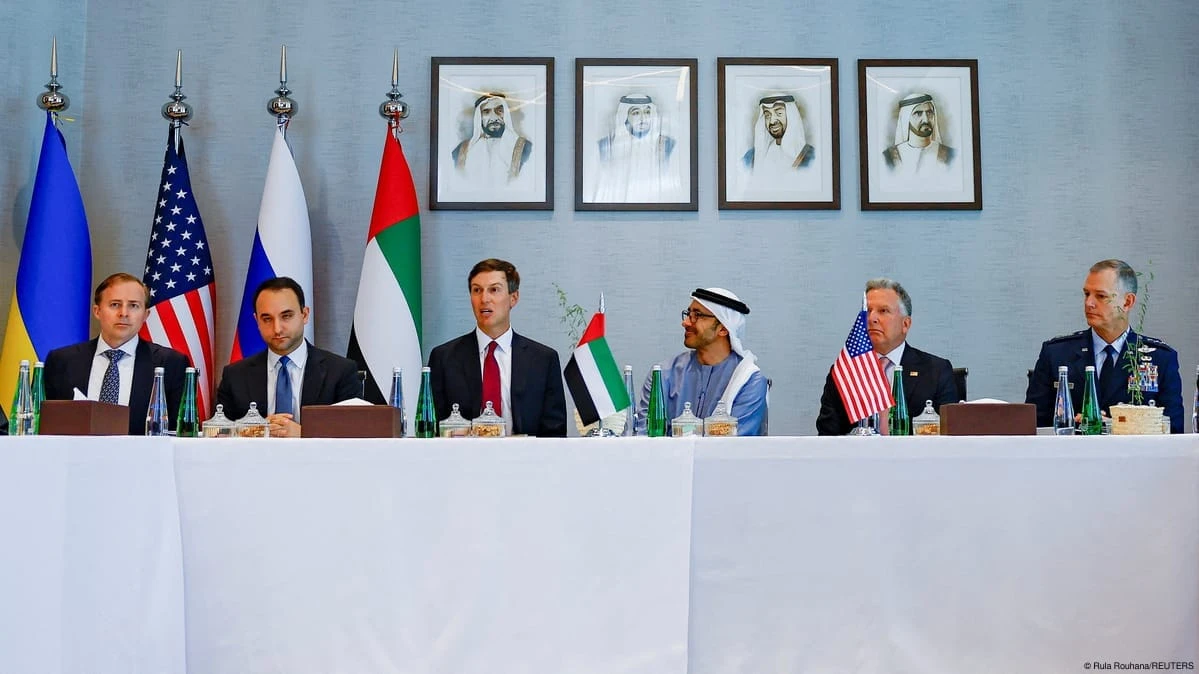
Russian and Ukrainian negotiators reported some progress in two days of peace talks in Abu Dhabi that ended on Wednesday, but US mediators said there was a lack of trust between the warring sides and differences remained on issues including territory, Reuters reports.
In their first peace talks for nine months, Russia and Ukraine agreed to a major release of prisoners of war, but there was little else in the way of concrete announcements after the US-brokered meetings.
US envoy Jared Kushner, US President Donald Trump's son-in-law, said mediators were appealing to each side's interests to end Europe's biggest conflict since World War Two and that he was convinced they could find a pathway to peace.
Despite public optimism from Trump, there has been no sign of major compromises on the main issues after more than 4-1/2 years of war since Russia's full-scale invasion of Ukraine.
With talks deadlocked on land - Ukraine has rejected Russian President Vladimir Putin's demands to surrender the whole of the eastern region of Donbas in return for peace - US mediators have tried to steer talks toward post-war security guarantees and reconstruction.
"The reality is there is no trust right now between the sides and that is to be expected after a conflict like this," Kushner said, adding that the talks in the capital of the United Arab Emirates had touched on territorial issues and that these would be the hardest to resolve.
"Some areas we see places where we can find compromises, other we need to have more discussions, but I think this was a very good step," he said.
Kushner said he and fellow US envoy Steve Witkoff would travel to Moscow on Thursday for talks with Putin at which they would raise the question of broadening the talks to include European partners, who he said must be at the table.
He said security architecture in Europe could form the basis for an agreement, without providing details.
As the Trump administration has scaled back its direct support to Ukraine, Europe has become its leading provider of finance and military support.