



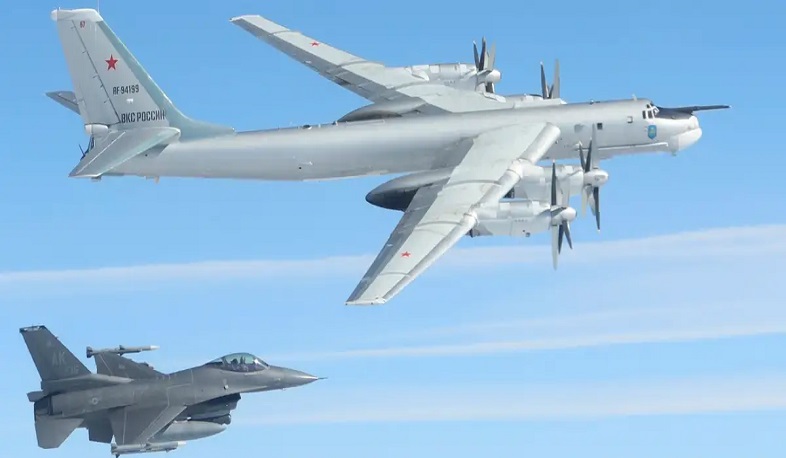
NORAD on February 19, 2026, detected a Russian air formation, including Tu-95 bombers and Su-35 fighters, operating inside the Alaska Air Defense Identification Zone and launched a multi-aircraft intercept. The response underscores continued U.S. vigilance in the Arctic as Russian long-range aviation activity remains steady near North American airspace.
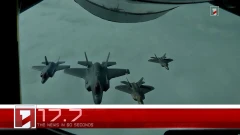
The North American Aerospace Defense Command announced February 19, 2026, that it detected and tracked a five-aircraft Russian formation operating within the Alaska Air Defense Identification Zone, prompting the launch of two F-16 Fighting Falcons, two F-35 Lightning II fighters, an E-3 Airborne Warning and Control System aircraft, and four KC-135 Stratotankers to identify and escort the aircraft. According to NORAD, the formation included two Tupolev Tu-95 strategic bombers, two Sukhoi Su-35 fighters, and one Beriev A-50 airborne early warning aircraft. The Russian aircraft remained in international airspace and did not enter the United States or Canadian sovereign territory, but their presence triggered a coordinated response designed to monitor and deter potential threats in the increasingly strategic Arctic region.
The composition of the Russian formation reflects a coordinated operational structure. The Tupolev Tu-95, designated Bear by NATO, remains a key element of Russia’s long-range aviation fleet. Powered by four Kuznetsov NK-12 turboprop engines with contra-rotating propellers, the aircraft has a range exceeding 12,000 kilometers and can carry cruise missiles such as the Kh-101, which is assessed to have a range of more than 2,500 kilometers. This standoff capability allows the bomber to conduct strike missions without entering defended airspace, reinforcing its deterrence role.
The Sukhoi Su-35 fighters provide escort and air-superiority coverage. Equipped with the Irbis-E passive electronically scanned array radar, reportedly capable of detecting large aerial targets at several hundred kilometers, the Su-35 can employ beyond-visual-range air-to-air missiles from the R-77 family. Their presence enhances the protection of the formation during long-range missions and supports coordinated operations with the bombers. The Beriev A-50, based on the Il-76 airframe and fitted with the Shmel radar housed in a rotating dorsal radome, adds an airborne command-and-control layer. The system is designed to track multiple aerial targets at extended ranges, allocate tasks, and facilitate data exchange between platforms.
On the North American side, the F-35 Lightning II contributes advanced detection capabilities through its AN/APG-81 active electronically scanned array radar and distributed aperture infrared sensor system, supporting early identification and tracking. The F-16 Fighting Falcon, capable of speeds above Mach 2, remains a standard alert interceptor and can employ AIM-120 Advanced Medium Range Air-to-Air Missiles for engagements beyond visual range. The E-3 Airborne Warning and Control System extends radar coverage over broad sectors and provides airborne battle management, while the KC-135 Stratotanker sustains fighter operations over long distances through in-flight refueling, a critical factor in the Arctic environment.