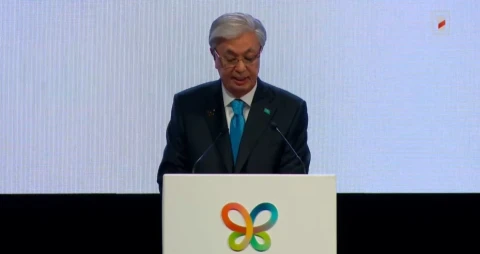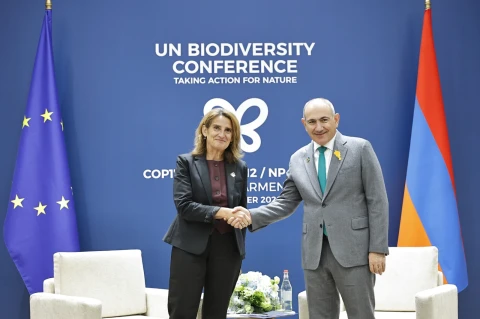




Peace and biodiversity are of great importance both domestically and across borders. Prime Minister of Armenia Nikol Pashinyan made this statement during a roundtable discussion held as part of the Leaders’ Summit.
“In conflict zones, there are usually minefields, and numerous animals are simply blown up by these landmines because many minefields are located along migration routes. Barriers and blockades are also established in conflict zones. Moreover, none of this is an isolated phenomenon.
Imagine that these conflicts last for decades. Over the course of those decades, significant damage is inflicted on biodiversity. More importantly, however, this damage is not recorded and is essentially unmeasurable, thus becoming uncontrollable. At a certain point, we simply find that certain animal species and particular areas of nature have been completely destroyed.
But it is very important to understand one thing: one of the key messages of the COP format itself is that it is impossible to achieve success in biodiversity and, more broadly, in matters concerning nature and biodiversity in an individual country alone,” he said, recalling an idea expressed during the conference that nature and biodiversity recognize no borders. Accordingly, he noted that animals do not apply for visas or need documents to cross from one country to another. Therefore, it is impossible to achieve success in environmental conservation and protection in any one country in isolation.
“Conflicts not only cause damage but also, in essence, in many cases rule out cooperation between countries on biodiversity-related issues, further exacerbating the damage caused and increasing its impact.
Therefore, peace and biodiversity are of great importance both domestically and across borders,” he said.