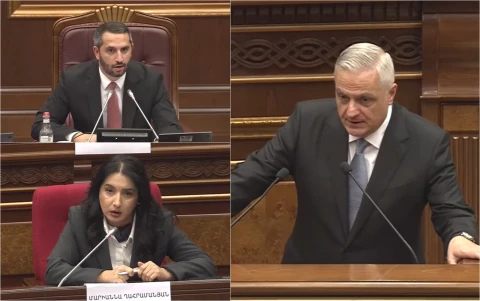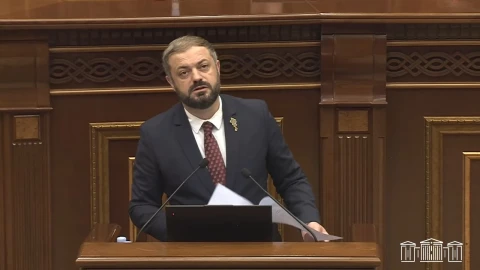

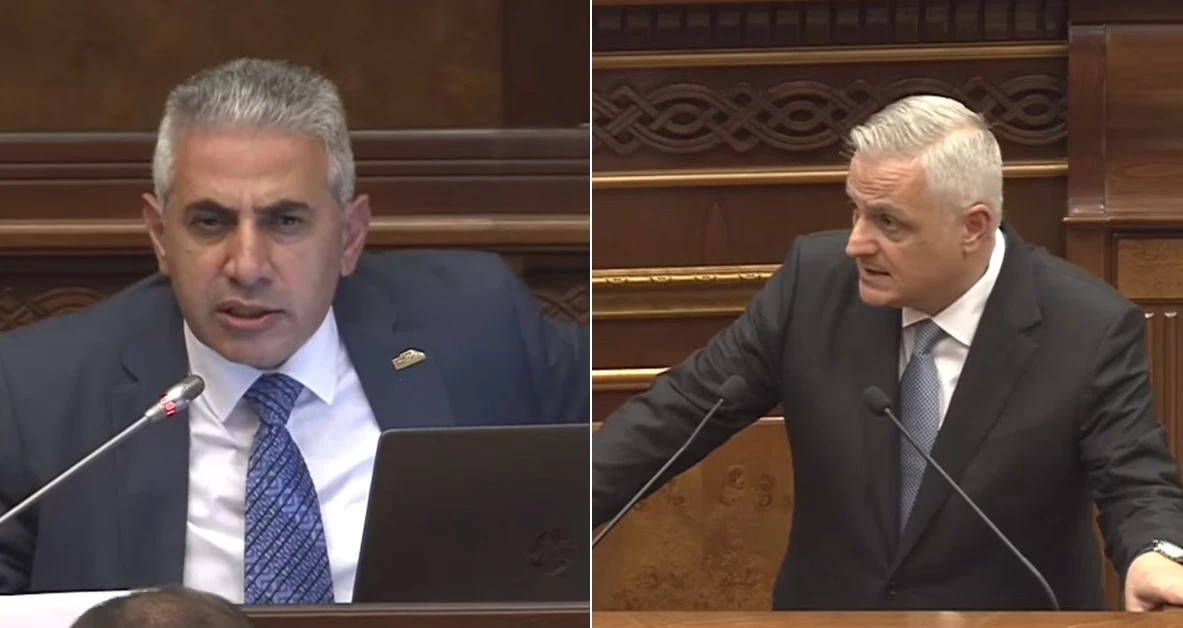
Under the approved regulations governing the border delimitation commissions and the general framework of our legislation, final decisions on the border will be set out in a bilateral agreement that will have the force of law and be imperative and binding on both countries. Deputy Prime Minister Mher Grigoryan made the statement during a question-and-answer session between the National Assembly and the Government, responding to a question from Edgar Ghazaryan, a member of the 'Strong Armenia' faction.
“The processes carried out before that were, of course, joint efforts, agreements and delimitation work, but their outcome must be incorporated into a bilateral treaty. As for the actions taken before and after the regulations were adopted, I can tell you the following: the work carried out concerning the 12.7-kilometer section involved restoring the existing border on the map of the Soviet Union’s General Staff through topographic reconstruction.
“This was topographic work through which the boundary line was restored on the basis of a map that was binding on both countries during the Soviet era. That map was drawn up and approved in accordance with the procedure established by Soviet legislation and became binding on both republics.
“Naturally, numerous problems arose in the process, leading us to conclude that commissions had to be established, that their work needed to become more institutionalized, and that the process should continue on the basis of the regulations through joint work by the commissions,” Mher Grigoryan said.