

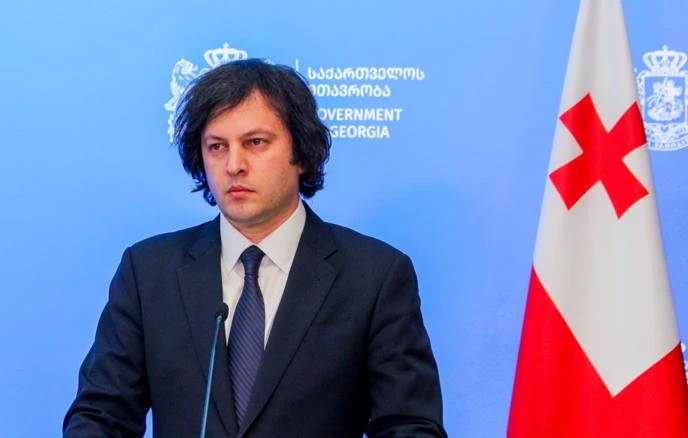
"We are often urged to use different rhetoric when addressing European institutions, but when the European Parliament approves such a resolution and holds debates of this nature, it is very difficult to make a positive comment—or, indeed, to avoid making a negative one," said Prime Minister Irakli Kobakhidze, commenting on the European Parliament's resolution.
According to the Prime Minister, such actions by the European Parliament certainly bring to mind the Supreme Soviet of the Soviet Union.
"You know, we are often urged to use a different tone when speaking about European institutions; however, when the European Parliament approves a resolution like this—and when debates of this nature take place—it is very difficult to offer any positive comment, or indeed, to avoid making a negative one.
Naturally, such actions by the European Parliament remind us of the Supreme Soviet of the Soviet Union. I believe the Supreme Soviet was actually in better shape during the 1980s, as the Soviet Union was counting down the final years of its existence. The European Parliament is in a dire state—the entire European bureaucracy is in a dire state—and debates and documents like these are a reflection of that. This is no longer of interest to Georgian society," the Prime Minister noted.
For the record, a resolution titled “The attempts by the ruling party, Georgian Dream, to ban opposition parties in Georgia" was adopted at the European Parliament's plenary session by 445 votes to 37, with 97 MEPs abstaining. The draft resolution, published prior to the debate on the matter, states that the European Parliament strongly condemns attempts to ban Georgian opposition parties and demands the immediate withdrawal of the constitutional lawsuit filed against them. Furthermore, the European Parliament calls on the EU and its member states to impose sanctions on Bidzina Ivanishvili, the Honorary Chairman of Georgian Dream; Prime Minister Irakli Kobakhidze; Parliament Speaker Shalva Papuashvili; and Tbilisi Mayor Kakha Kaladze.